

An “SD Card Error” is one of the most frequent issues across many GoPro cameras, including newer models such as the HERO10, HERO11, and later generations. When this message appears, the camera may block access to existing photos and videos and refuse to record new footage.
If the error happens while you are shooting and do not have a spare card, it can stop your recording session entirely. We will explain what GoPro SD card error actually means and show you how to handle it without making the situation worse.
If your GoPro shows an SD card error, stop recording and avoid formatting the card or saving new footage to it until you know what caused the problem. Continued use may overwrite footage that could still be recovered. Common signs of an SD card problem include “SD ERR” or “NO SD” on the camera screen, inaccessible photos or videos in the GoPro app or other software, and unexpected shutdowns or restarts when the camera tries to read the card.
Why Does My GoPro Say SD Card Error?
If your GoPro shows an error or a speed warning such as “Upgrade Your SD Card,” it means the camera cannot reliably communicate with the microSD card or cannot maintain stable write performance. This does not always mean the card is completely dead. From our experience, the issue falls into one of three categories:
- Compatibility or speed problems are one of the most common reasons a GoPro displays an SD card error. Modern models require sustained write performance to handle high-resolution video, typically at least a V30 microSD card and, on many newer cameras, an A2 rating. If the card does not meet these requirements or can no longer maintain stable speeds, the camera may stop recording or show SD errors. In these cases, formatting will not resolve the performance limitation.
- Card degradation over time is another common cause of SD errors. MicroSD cards wear out after repeated write cycles, and high-bitrate 4K or 5.3K recording speeds up that process. As the memory cells degrade, you may see unstable behavior such as write speed drops, random SD errors, or incomplete recordings. Even if the card works on a computer, it may fail under sustained recording load, and replacement is often the most reliable solution.
- File system corruption or interrupted operations can also trigger a GoPro Hero SD card error even when the hardware still works. Sudden power loss during a recording, removal of the card while the camera is on, a firmware update that stops midway, or incorrect formatting can damage the file system. The camera may then fail to read directory data and display an error or request formatting. In these cases, the problem is not physical damage but a corrupted file structure.
Make sure to choose a compatible SD card with your GoPro camera. Some of the recommended memory cards for GoPro cameras are the SanDisk Extreme PRO, Samsung EVO memory cards, and Lexar memory cards. GoPro provides an overview of suitable SD cards for each of their camera models on their page. Here is a summary of compatibility per model:
| Supported Camera Models | Minimum Requirement | Recommended microSD Cards (Capacity Range) |
|---|---|---|
MAX2 LIT HERO HERO (2024) HERO13 / HERO12 / HERO11 / HERO10 Black HERO11 Black Mini HERO10 Black Bones |
microSD with V30 + Class A2 rating |
SanDisk: Extreme, Extreme PLUS, Extreme PRO (64GB–1TB) Samsung: EVO Plus, EVO Select, PRO Plus, PRO Ultimate (128GB–1TB) Lexar: Professional 1066x Silver, SILVER PLUS (64GB–256GB recommended) PNY: PRO Elite (128GB–1TB) Kingston: Canvas Go! Plus (64GB–1TB) Gigastone: 4K Camera Pro / Extreme A2 V30 series (128GB–1TB) Amazon Basics: 64GB–512GB |
Not every GoPro SD card error is caused by speed limitations or physical wear. As we already mentioned, compatibility and degradation are common causes, but many SD errors stem from configuration or formatting issues that you can fix. We’ll show you how to safely recover your footage first and then walk through the repair methods that can resolve SD card errors when the issue is related to formatting, file system damage, or incorrect setup.
Our GoPro SD card data recovery and error fixing methods apply to all GoPro camera models and compatible microSD cards.<
Quick Fixes That Might Help
Before more complicated fixes, you can also try the quick checks below. They may resolve certain GoPro SD card errors without deleting data or performing a full format:
- Restart the camera if you see “SD ERR,” “SD Card Error,” or “SD Card Busy.” These messages can appear after a temporary communication problem or an interrupted recording. Turn the camera off completely, wait a few seconds, and power it back on. Some GoPro models attempt automatic file repair during startup and may restore access to recently interrupted clips.
- Reseat the card if the camera shows “NO SD” or “SD Card Removed.” This often indicates poor contact rather than card failure. Power the camera off first, remove the microSD card, and reinsert it firmly. Never remove or insert the card while the camera is powered on.
- Clean the SD card if you notice dust, dirt, or residue on the card or its contacts. With the card removed, gently wipe it with a clean, dry, lint-free cloth. Avoid liquids, household cleaners, and abrasive materials that could damage the contacts. Check the GoPro’s card slot for visible debris as well, but do not insert tools or other objects into it.
- Try a different card reader if the SD card works in the camera but shows errors on your computer. Inconsistent detection may relate to the reader or cable rather than the card itself. Use a reliable, dedicated microSD card reader instead of connecting the camera via USB.
- Update the firmware if SD errors begin after a system update or when using a newly installed card. Firmware compatibility issues can trigger detection or recording problems. Follow the official GoPro update procedure and do not remove the battery or SD card during the process.
If none of these quick checks resolve the issue and the card still shows formatting prompts or file system errors, you can proceed with controlled repair methods in the next sections.
How to Recover Files From GoPro SD Card With Error Showing Up
If your GoPro shows “SD ERR” or requests formatting, recover your files before attempting any repair. Tools like CHKDSK or formatting can modify the file system and reduce your chances of full recovery.
For this reason, we recommend Disk Drill. It combines strong general recovery capabilities with specialized camera support. The software handles common GoPro formats such as MP4, MOV, HEVC (H.265), LRV, and 360 video, and it provides reliable video previews so you can confirm that a clip plays correctly before you recover it.
In addition, its Advanced Camera Recovery module can recover fragmented video files. GoPro cameras can store 4K, 5.3K, and 360 footage as multiple related data streams and components, including video data, audio tracks, and preview or thumbnail data. Many tools detect these files but fail to reconstruct them properly, which results in unplayable or partially restored videos. Disk Drill scans the entire card, identifies related fragments, and restores them as complete files.
Here’s how to use Disk Drill to recover your files on your GoPro camera’s SD card:
- To get started, download the Disk Drill installer from the Cleverfiles official website.
- Next, launch the Disk Drill installer and begin the installation process by clicking the Install button. Afterward, just wait for the installation to successfully finish.
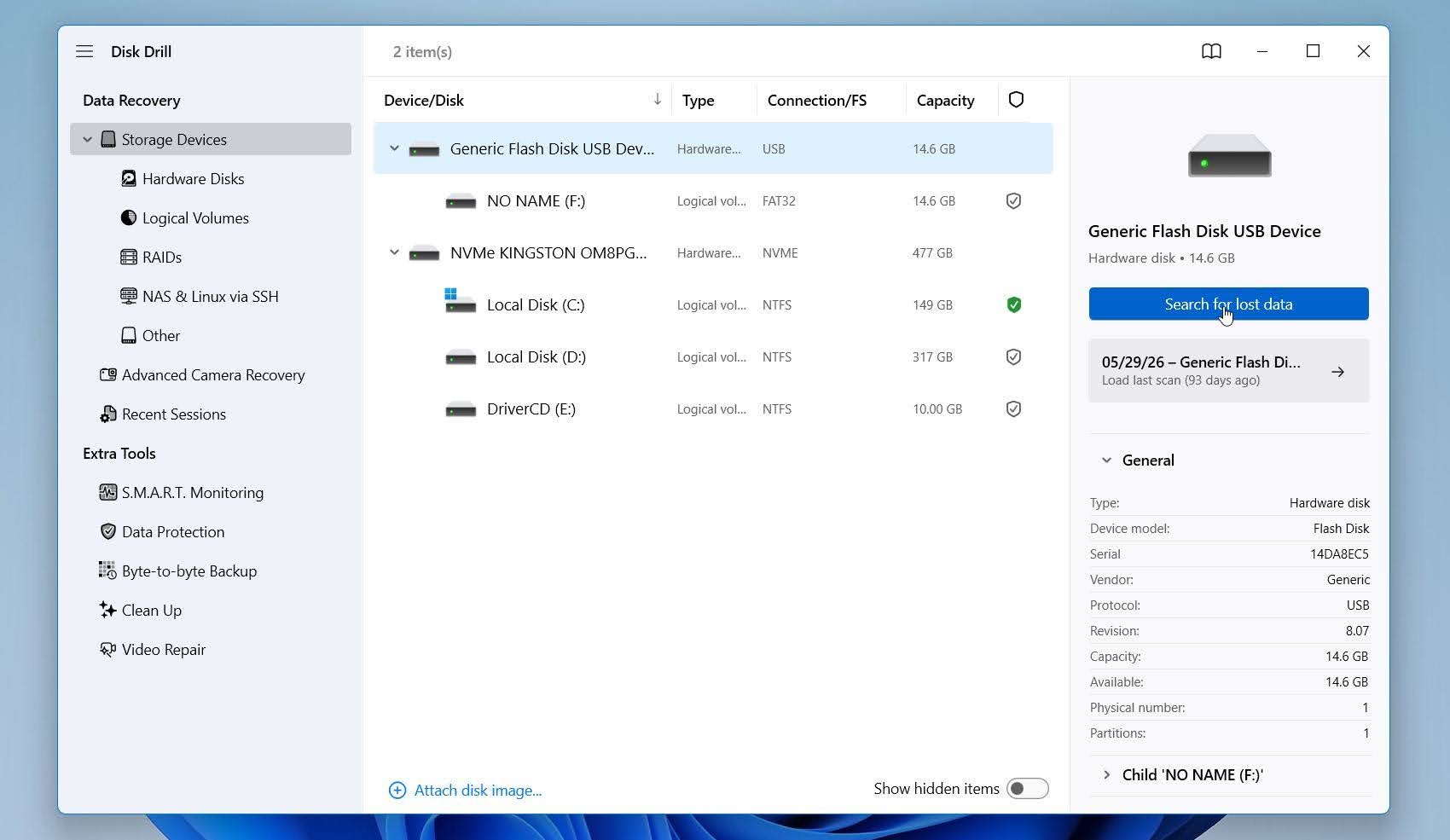
- After successfully installing the app, open Disk Drill. Make sure to insert your SD card at this point to see it on the list of devices and disks you can scan for data recovery. Then, select your SD card and click the Search for lost data button.
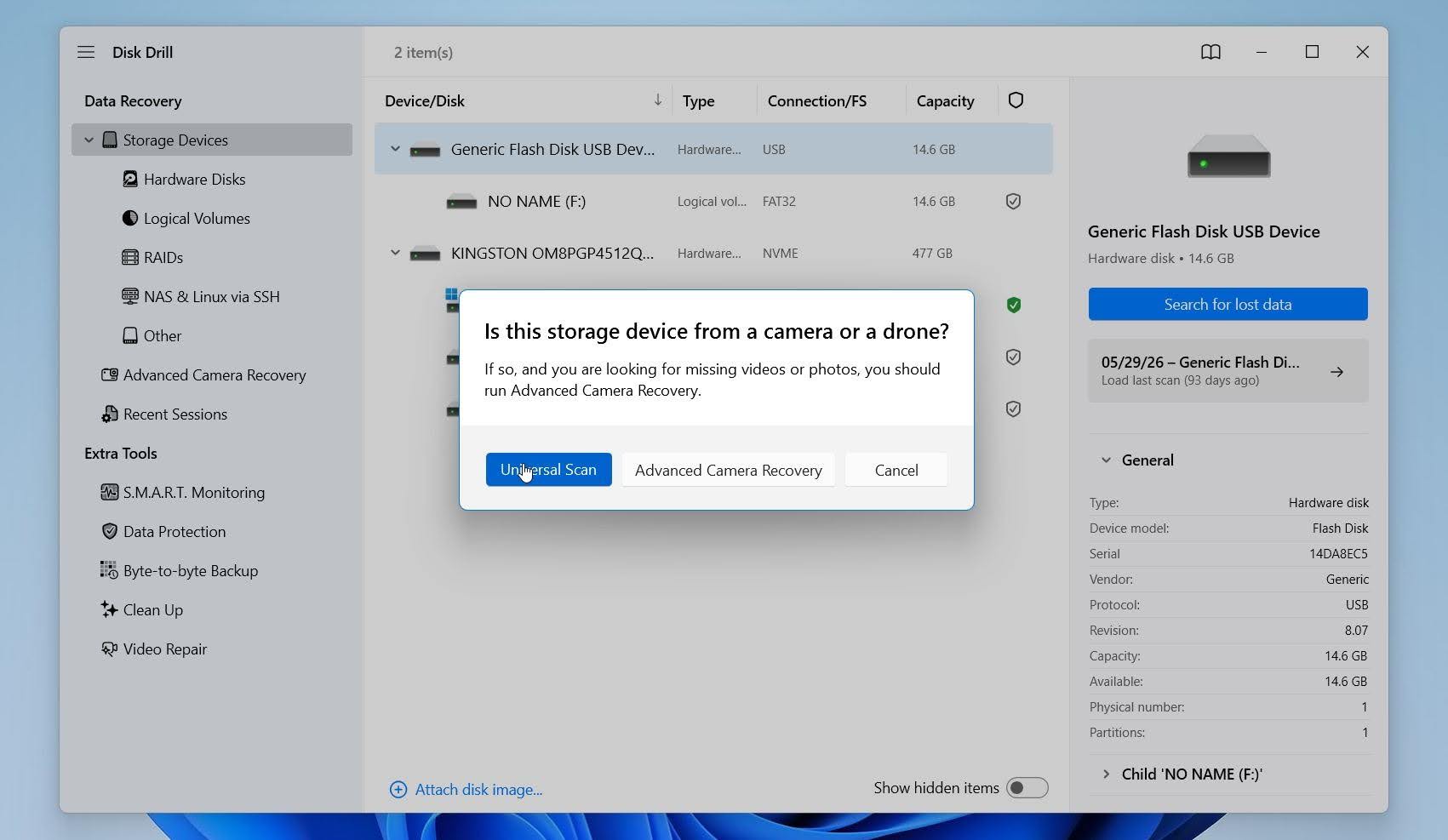
- When the scan options appear, start with Universal Scan for deleted files or a corrupted file system, since it can use available file system metadata to reconstruct the original files. If the recovered videos are corrupted or won’t play, try Advanced Camera Recovery next.
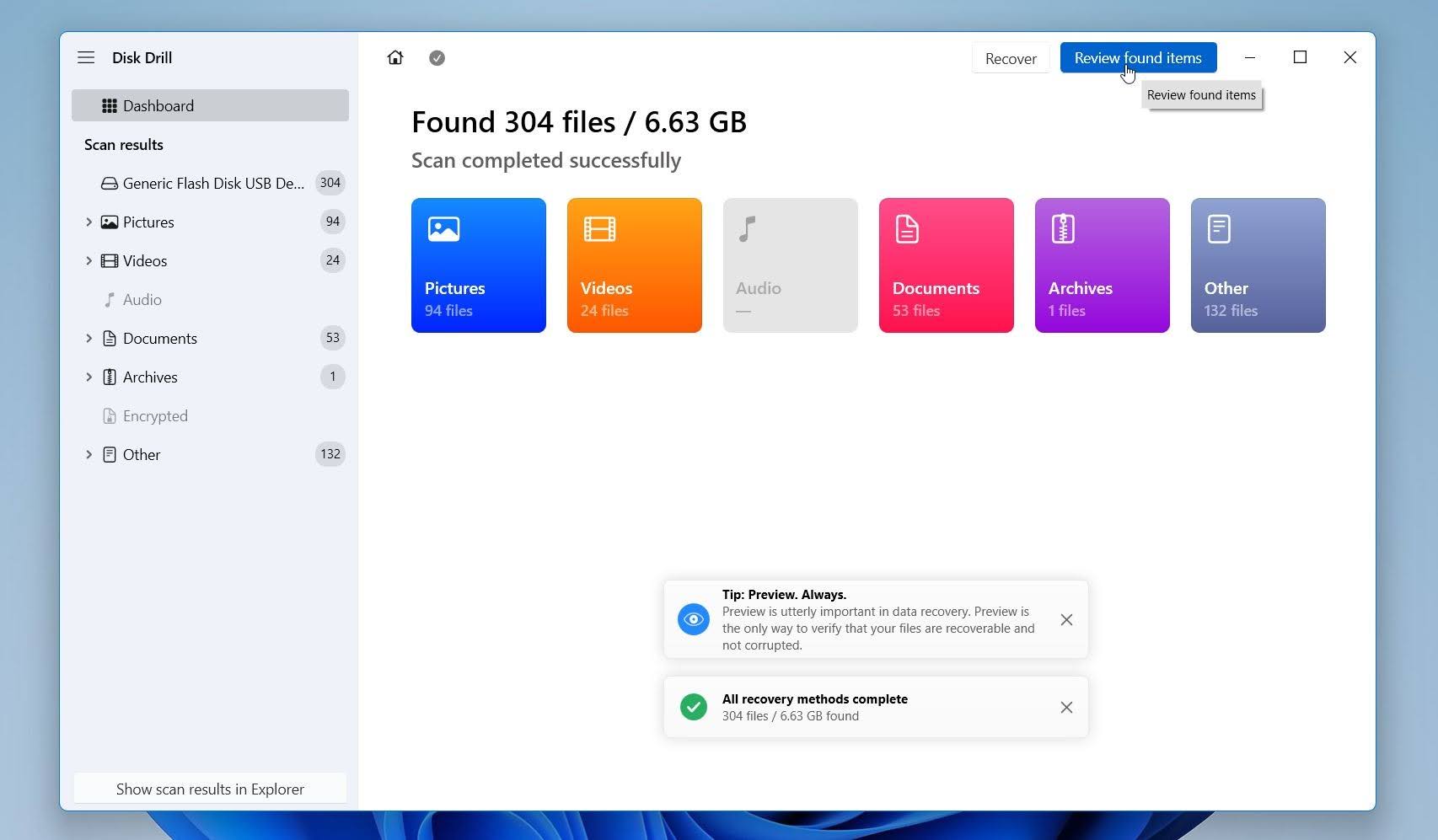
- During the scan, you can already check what Disk Drill has found so far. Alternatively, you can wait for the scan to finish and click the Review found items button to view the results.
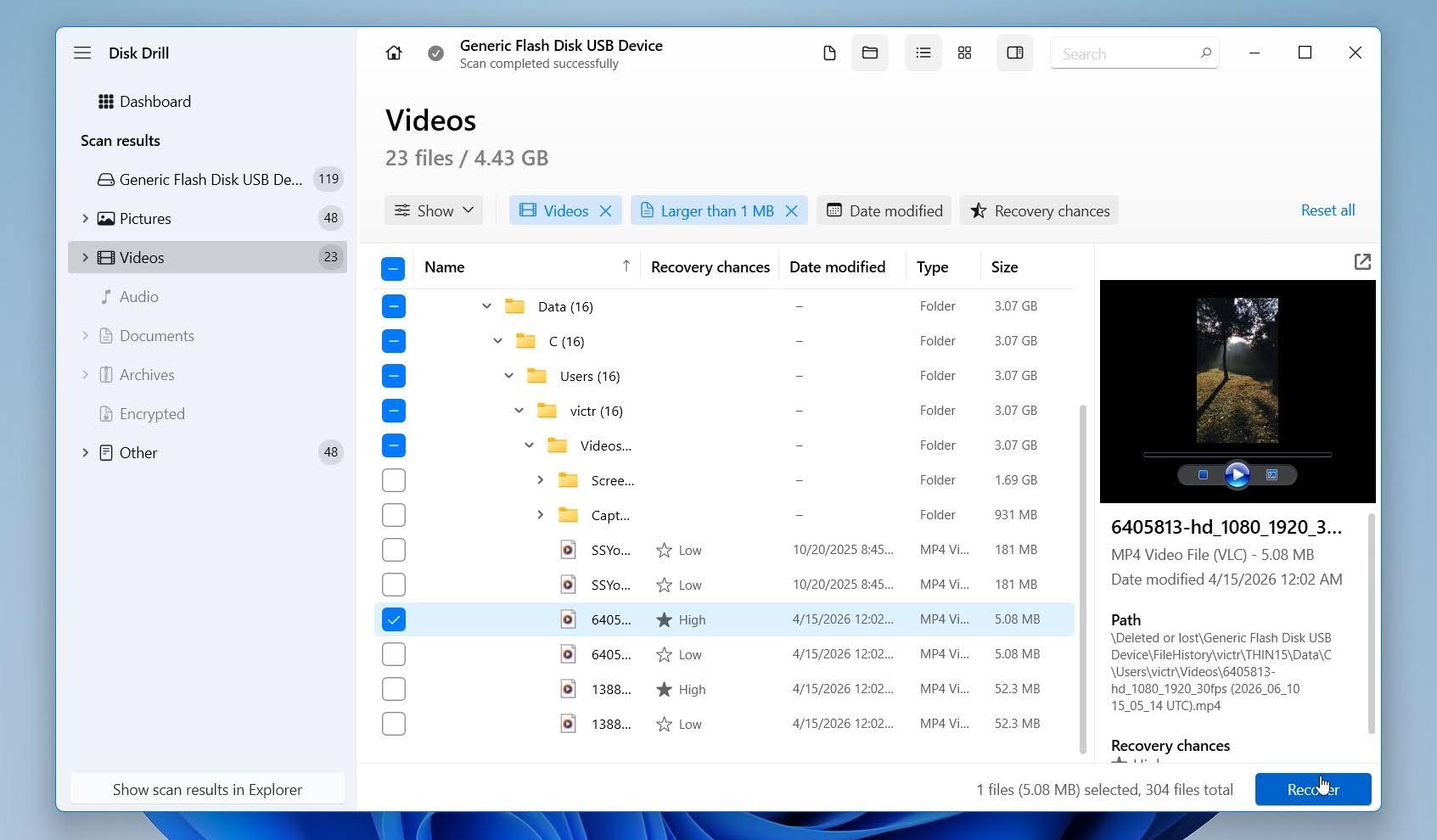
- After the scan, you can scroll through all the files on the results page. You can use filters to narrow the list down. Use preview to see if the files are intact. If the video plays, it’s a strong indicator it can be recovered. Once you see the media you want to recover, tick the checkboxes next to their file names. Then, click Recover.
- A window will pop up asking for the destination for your recovered files. Select the file location where you want to put them and click Next. It is recommended to place your files in a different partition than the one you scanned.
After the recovery attempt has finished, you will be notified if it was successful. You can browse the files by clicking Show recovered data in Explorer.
Read our Disk Drill review to know more.
How to Fix SD Card Error on GoPro
Once you’ve recovered your files (or if the card doesn’t contain anything important), you can try fixing the formatting error. The problem is often caused by file system corruption, an incompatible format, or a card that wasn’t properly prepared for use in a GoPro camera. Start with the least invasive solution and only move on to formatting if necessary, since formatting erases all data on the card. If the error keeps coming back after these steps, the SD card may be reaching the end of its lifespan and should be replaced.
Method 1: Format the SD Card in Your GoPro
The first option is to format the SD card directly in your GoPro. This is generally preferable to formatting it through File Explorer because the camera prepares the card with the file system and settings it expects.
Important: Formatting deletes the files stored on the card, so recover or back up anything important first.
The exact menu names can differ slightly between GoPro models, but on many recent models you can format the card as follows:
- Power off the GoPro and insert the SD card.
- Turn the camera back on.
- Swipe down from the top of the screen to open the dashboard.
- Swipe left and open Preferences.
- Scroll down and select Reset.
- Select Format SD Card.
- Confirm the format.
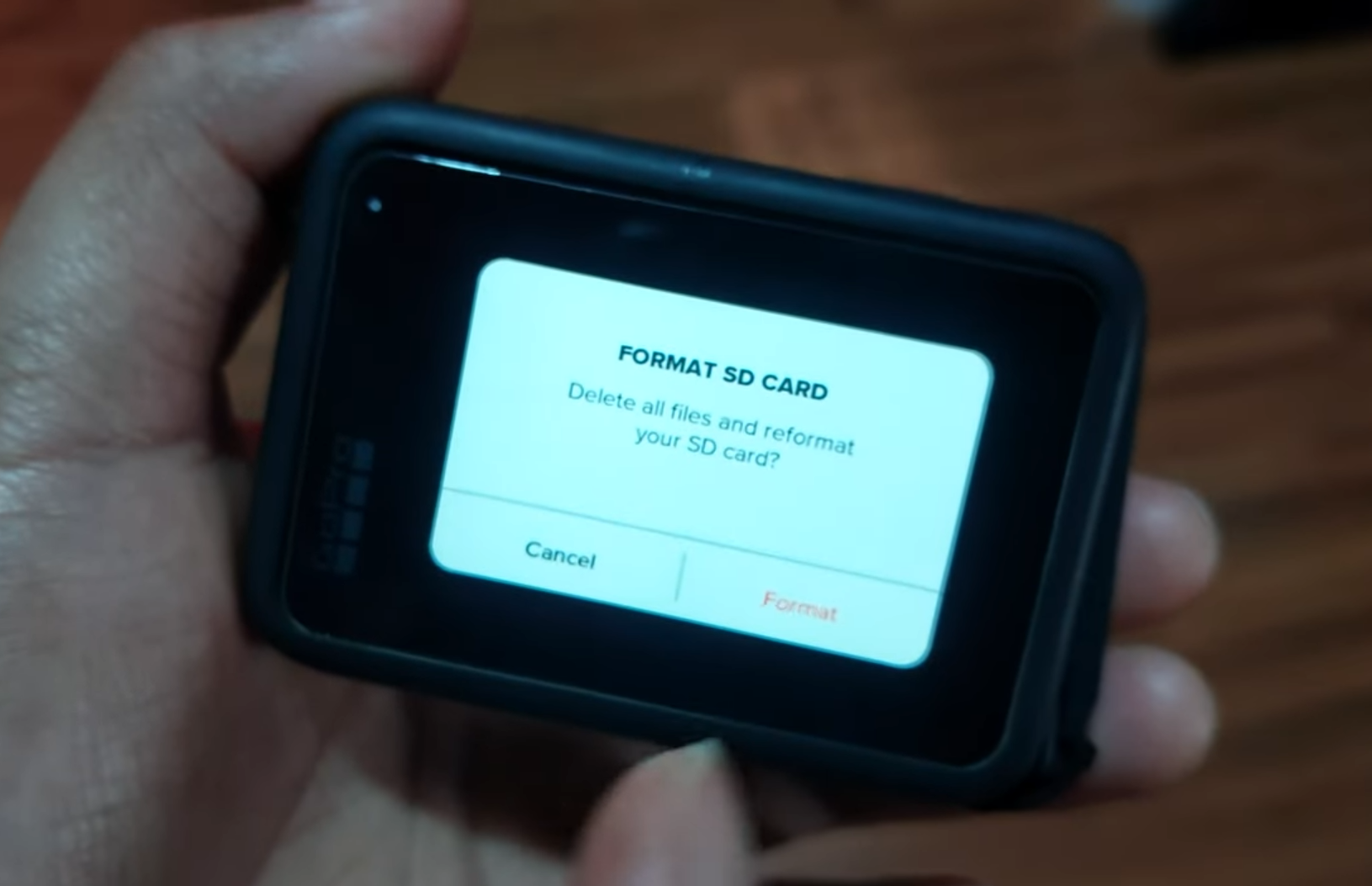
After the format completes, test the card by recording several videos. If the SD card error appears again, move to the next method.
Method 2: Use SD Memory Card Formatter
If an in-camera format doesn’t resolve the problem, try the official SD Memory Card Formatter from the SD Association. Unlike a standard quick format, its Overwrite Format option writes across the card’s user-accessible area and can help identify whether the card can still complete a full write operation reliably.
Overwrite Format erases the data on the card and makes subsequent recovery much less likely. Recover any important files before you proceed.
Here’s how to use it:
- Download and install SD Memory Card Formatter from the SD Association.
- Connect the SD card to your computer through a card reader.
- Open SD Memory Card Formatter.
- Select your GoPro SD card. Double-check the drive before you continue.
- Select Overwrite format as the formatting method.
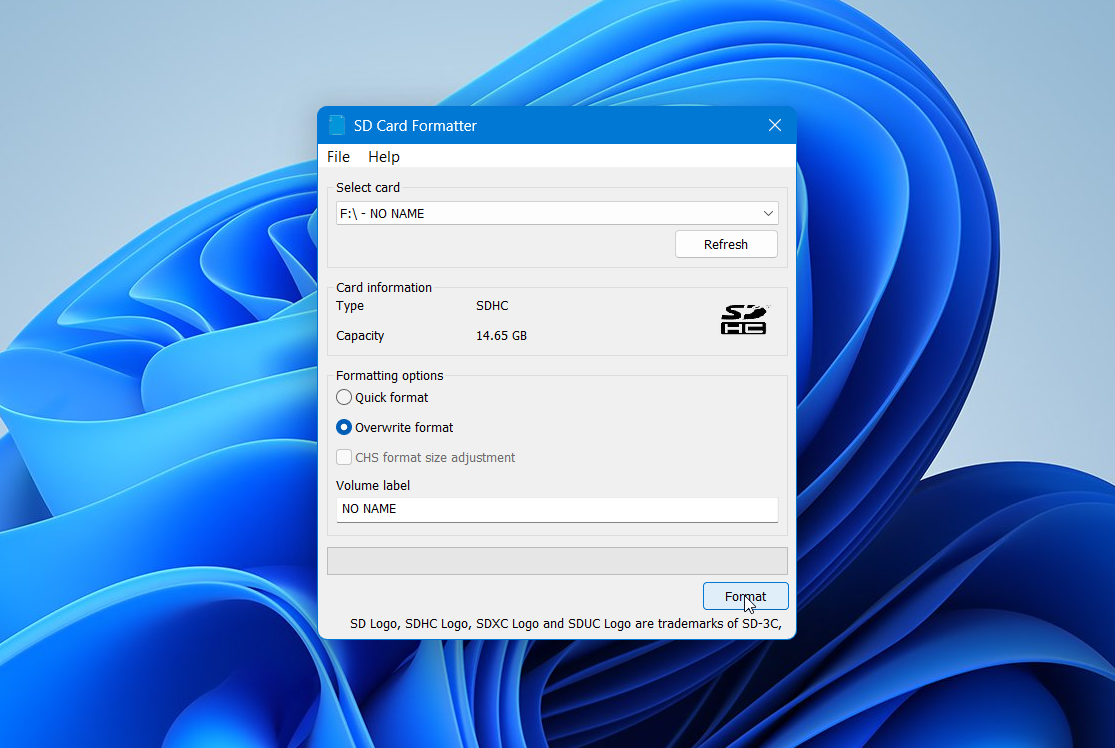
- Start the format and wait for it to finish.
- Safely eject the card and insert it back into your GoPro.
- Format the card once more through the GoPro’s menu before you start recording.
If the overwrite format fails, the computer repeatedly loses connection to the card, or GoPro errors return afterward, don’t continue to rely on the card for important footage.
Method 3: Replace the SD Card
If your GoPro continues to report SD card errors after an in-camera format and an Overwrite Format, replacing the card is the safest option. Repeated errors can indicate worn-out NAND flash, controller problems, or another hardware issue that formatting cannot repair.
This is especially important if the camera freezes during recording, unexpectedly stops recording, repeatedly displays SD ERR, or produces corrupted video files.
Choose a card that meets the speed and capacity requirements for your specific GoPro model. GoPro maintains a list of recommended microSD cards that have been tested for use with its cameras.
Once you have the new card, insert it into the GoPro and format it through the camera before your first recording session (Method 1).
Final Thoughts
A GoPro SD card error does not automatically mean your footage is gone. In most cases, the issue falls into one of three categories: communication problems, file system corruption, or performance and card health limitations.
The most important rule is simple: recover first, repair second. File system repairs, CHKDSK, First Aid, and formatting can permanently change the card structure. Secure your videos before attempting any fix. If the card shows instability, create an image and work from that copy.
Modern GoPro cameras require fast, high-quality microSD cards, typically V30 and often A2-rated. They also warn that SD cards degrade over time. If errors continue after proper formatting and firmware checks, replacing the card is often the safest and fastest solution.
Use compatible, brand-name cards, avoid removing the card while the camera is powered on, and regularly format the card inside the camera. These simple habits reduce the risk of future SD errors and help protect your footage.
FAQ
How do I recover video from a GoPro SD card that shows an error?
If your GoPro displays “SD ERR,” “NO SD,” or requests formatting, recover your footage before attempting any repair. File system repair tools and formatting can modify the card structure and reduce recovery chances.
Here is how to recover your videos safely using a data recovery tool:
- Power off the camera and remove the SD card.
- Connect the card to your computer using a reliable microSD card reader.
- Launch your data recovery software and select the SD card.
- Start a full scan. If the tool offers a camera-optimized or deep scan mode, select it first for better video reconstruction.
- Preview the found files and check that the videos play correctly in the preview window.
- Select the videos you want to restore and recover them to a different drive, never back to the same SD card.
If a recovered video does not play correctly, confirm that your computer supports HEVC (H.265), which many GoPro models use for high-resolution recording, before assuming the file is damaged.
How do I fix a GoPro SD card error on Mac?
If your GoPro shows an SD card error on Mac, follow these steps in order after you secure your important footage:
- Recover important files first using a data recovery tool. Do not attempt repairs before you secure your footage.
- Insert the SD card into your Mac using a card reader.
- Open Disk Utility and select the SD card from the sidebar.
- Click First Aid, then run the scan. First Aid checks and repairs logical file system errors.
- If First Aid cannot repair the card, select Erase in Disk Utility and format the card (use exFAT for most modern GoPro cards).
After formatting on Mac, insert the card back into your GoPro and format it again inside the camera.
Why is my GoPro taking a long time to format?
In-camera formatting usually takes only a few seconds. If it takes much longer, the card may have file system damage or degraded memory cells. Recent GoPro documentation notes that SD cards degrade over time. If formatting is slow, fails repeatedly, or errors return, replace the card, especially if it does not meet V30 and A2 requirements for newer models.
Why does my GoPro say the SD card is full and turn off?
If your GoPro reports that the card is full when it is not, the file system may be corrupted. Hidden or incomplete files from interrupted recordings can also cause incorrect space calculations. Recover your files first. Then perform a proper reformat using your PC and finish with an in-camera format.
Why can’t my GoPro format the SD card?
This usually indicates file system corruption or card instability. Recover your footage first. Then try formatting the card on a computer. After that, format it again inside the GoPro. If formatting still fails, the card may be physically degraded and should be replaced.
Why does my GoPro keep showing “SD Card Error”?
Persistent SD card errors typically fall into three categories:
- The card does not meet performance requirements (modern models often require V30 and sometimes A2).
- The card has degraded from repeated high-bitrate recording.
- The file system is corrupted due to sudden shutdown, improper removal, or interrupted firmware updates.
If errors appear together with a speed warning such as “Upgrade your SD card,” treat it as a performance or card health issue rather than a formatting issue. Replacement may be the correct solution.
Always recover important files before attempting fixes.
This article was written by Princess Lescan, a Staff Writer at Handy Recovery Advisor. It was also verified for technical accuracy by Andrey Vasilyev, our editorial advisor.
Curious about our content creation process? Take a look at our Editor Guidelines.