
If you’ve deleted photos from your camera, put it down for ten minutes and read this guide. Before you take another shot or use some random software, take a few minutes to learn how to recover deleted photos from a Nikon camera the right way.
We’ve recovered shots off everything from entry-level DSLRs to Z-series mirrorless rigs. The trick is knowing what to do first… and what not to do. Let’s walk through it step by step.
Want to skip the introduction part and jump straight to the recovery guide? Click here.
Key Takeaways
- Deleted doesn’t mean erased. Your Nikon usually just marks the space as available. Recovery is often possible. Use data recovery software.
- Pull the memory card and set it aside. Don’t browse, don’t “test” it with a new shot.
- Recover from the card, not the camera. Use a card reader.
- Quick format is often recoverable. Full format isn’t.
- Best results come from recovery tools that handle Nikon RAW well. Look for support for NEF/NRW (plus JPG), and a reliable preview.
- Always recover to your computer (or another drive), never back to the same card. It can overwrite what you’re trying to save.
- Your Nikon model matters less than your actions. Card type + format type matters, but what you did right after deletion matters more.
- If you used SnapBridge/Nikon cloud features beforehand, check the cloud. It won’t “recover” files, but it might have a copy.
- If the card is physically damaged, skip DIY. Cracked/bent/not detected at all = professional recovery lab territory.
Can I Recover Deleted Photos from My Nikon Camera?
We want to start with a bit of reassurance here: it is absolutely possible to recover deleted photos from a Nikon camera, whether it’s a DSLR, mirrorless, or even a Coolpix compact. The reason’s pretty straightforward – when something gets deleted from your memory card, it’s not actually wiped right away. The camera just marks that space as “available,” but the actual image data usually stays there until something new gets saved on top of it.
Since the SD card is where your Nikon stores .NEF or .NRW raw image files, that’s where we focus recovery, and honestly, that’s what gets the best results in the real world. We’re talking about targeted recovery from the memory card itself using specialized DIY tools. And this isn’t based on anecdotal success stories. We actually ran a data loss survey recently, among folks who tried DIY recovery before anything else, about 79% were able to get their files back.
Common Data Loss Scenarios Related to Nikon Cameras
Losing data on your Nikon cameras is common, and it can occur for multiple reasons. Here’s a list of some of these reasons and their solutions:
Data Loss Reason |
Description |
Solution |
Accidental deletion |
If you delete your photos or videos by accident |
Stop using the camera. Remove the card. Recover deleted files from an SD Card with recovery software. |
Camera interrupted during saving (the file never showed up on the card) |
If the battery dies, the camera freezes, or shuts down while saving a photo or video |
Remove the card. Recover files from your SD card using data recovery software that supports camera recovery modes, like Disk Drill’s Advanced Camera Recovery. |
Formatting the SD card by mistake |
Card shows empty after formatting |
You can attempt to recover photos using available methods to recover data from formatted SD cards. |
SD card isn’t showing up on File Explorer, throws errors, becomes RAW, etc. |
If your SD card has become corrupted or isn’t recognized by File Explorer |
You can turn to data recovery software if your SD card becomes RAW. Once you’ve recovered your files and confirmed they’re safe, you can go ahead and reformat the card. Either format it on your computer or, even better, directly in your Nikon camera. |
Physical Damage |
SD card is bent, cracked, broken, not detected at all |
Do not attempt DIY recovery. Contact a professional data recovery lab with flash memory expertise. |
What to Do Immediately After Losing Nikon Photos
No matter what type of data loss you’re dealing with, whether you accidentally hit delete or your Nikon glitched mid-transfer, there’s a quick checklist you should follow right away to give yourself the best shot at Nikon photo recovery:
- First, stop using the camera immediately. Don’t take another photo, don’t even scroll through the gallery. Every new action risks overwriting the files you’re trying to get back.
- Next, power off the camera and take out the memory card, set it aside and leave it alone.
- Find a good card reader or use a computer with a built-in slot. Don’t connect the camera directly over USB (we’ll explain later why).
- Once the card’s out, don’t touch it again until your recovery software is installed and you’re ready to scan.
How to Retrieve Deleted Photos from a Nikon Camera
As we said, the best way to recover deleted photos from a Nikon camera is to scan the memory card directly with data recovery software. These tools check the file system first (if the records are still there, your photos show up almost instantly).
If not, some software can switch to a deeper scan. It looks for unique file signatures, like those used in Nikon’s NEF and NRW files, and pulls out anything it finds. This works even if the card was quick-formatted. Most of the time, this method gets great results.
Quick note: our team actually compared some of the most popular SD card recovery tools in an in-depth, side-by-side test. Out of that, we picked Disk Drill and Recuva to quickly show how you can recover deleted photos from your Nikon.
Why these two? Disk Drill, a freemium tool, came out on top in our tests (it had the highest recovery rate and cleanest preview system, so it gives you the best shot at getting your files back). Recuva, while much more basic, is lightweight and completely free, which makes it a good option for quick recoveries if you’re on a budget or need something simple. However, it often fails to recover data in more complex situations.
Option A: Disk Drill
Let’s start with Disk Drill. Like we mentioned, it’s one of the most capable recovery tools out there, especially when it comes to Nikon cameras. It has full support for file systems commonly used with Nikon SD cards, like FAT32 and exFAT, which cover everything from entry-level models like the D3500 to mid-range and mirrorless models like the D7500, Z5, and Z6.
Its signature scan is where it really shines. Disk Drill includes a rich library of file patterns and knows how to recognize .NEF (RAW format from most Nikon DSLRs and mirrorless), .NRW (used by many Coolpix cameras), and standard JPEGs. That makes it strong even in tough recovery cases.
Note: You can use Disk Drill not only to retrieve deleted photos from SD cards but also in cases of storage corruption, RAW recovery, etc. It’s a sophisticated tool with an intuitive UI that can assist you with photo recovery from your Nikon camera. Disk Drill even allows you a free trial with up to 100MB of free data recovery, which is rare for a tool with this level of recovery engine. That’s often enough to rescue a handful of important Nikon photos (especially if they’re JPEGs or even a few NEF files). No license required upfront, and you get a real sense of how well it works.
Here’s how you can recover deleted photos from your Nikon camera using Disk Drill:
- Download and install Disk Drill from the official website.
- If you haven’t already, safely eject the SD card from your Nikon camera, as we advised earlier.
- Now, connect your SD card to the computer. You can either use a USB cable with the camera or an SD card reader.
- Launch Disk Drill, and you’ll see a list of connected drives.
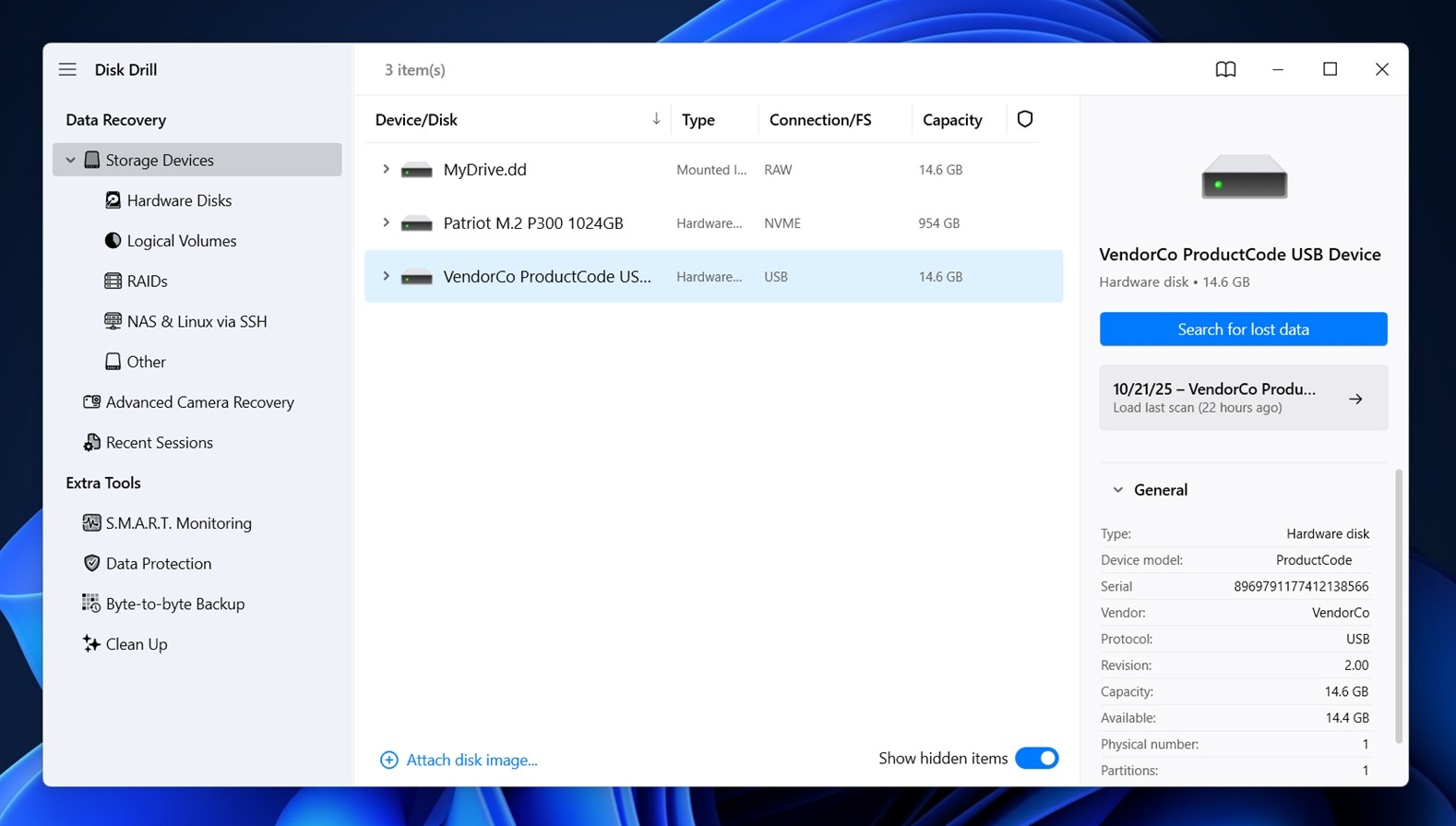 Look for your Nikon memory card. You might see one partition, or several; choose the entire card. That gives Disk Drill access to everything.
 - Click Search for lost data next, and Disk Drill will ask you to pick a scan method: Universal Scan or Advanced Camera Recovery.
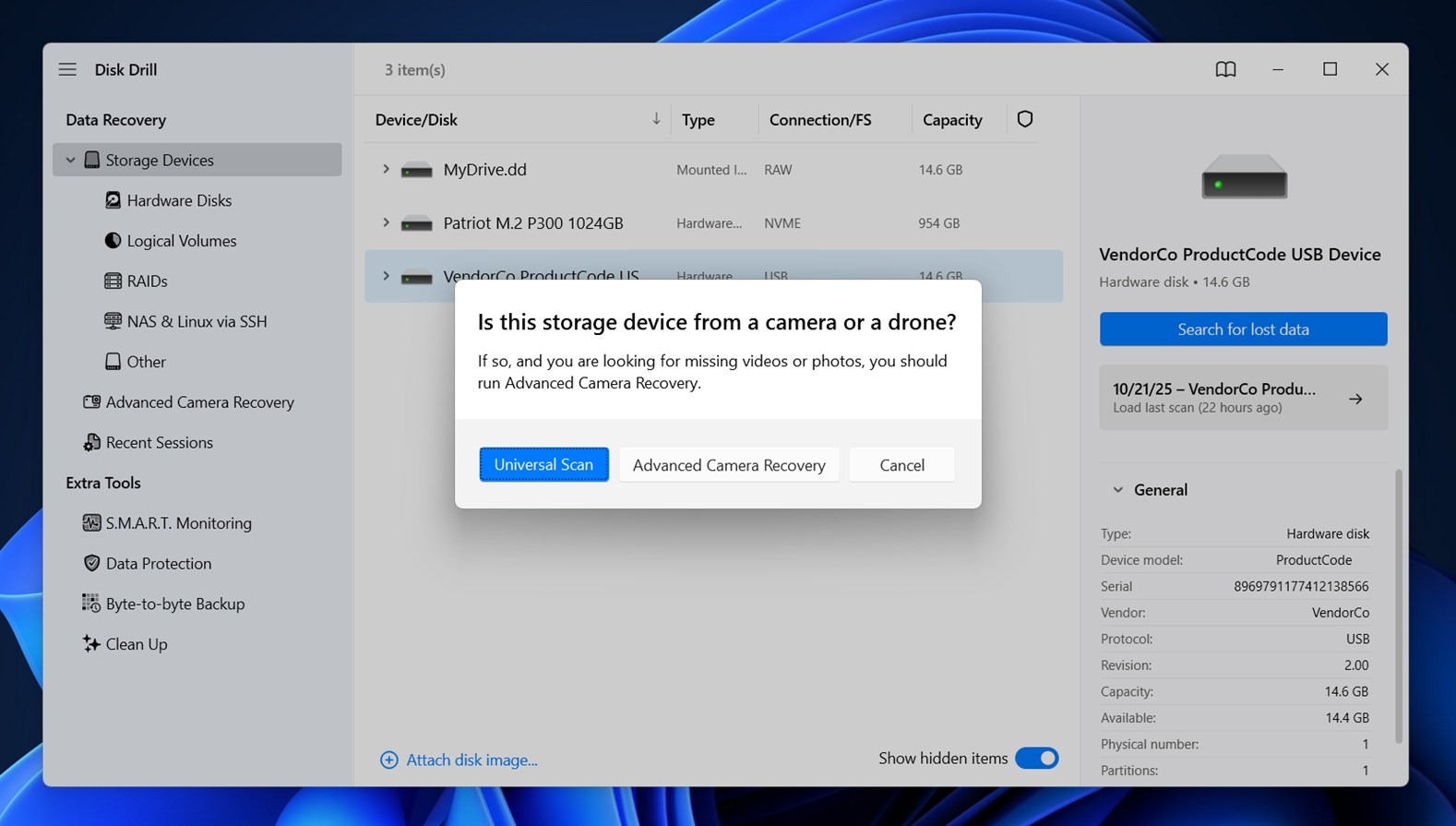 Stick with Universal Scan. It’s quicker and works well for most situations, especially with deleted photos from Nikon cameras. 👀
Advanced Camera Recovery is built for tougher jobs, like when you’re dealing with fragmented files or missing videos. This mode can piece together scattered fragments, especially for larger multimedia files. If the regular scan doesn’t find what you need, this is your backup plan.
- While the scan runs, you can already start browsing results. Files are sorted into categories: Pictures, Videos, Documents, etc.
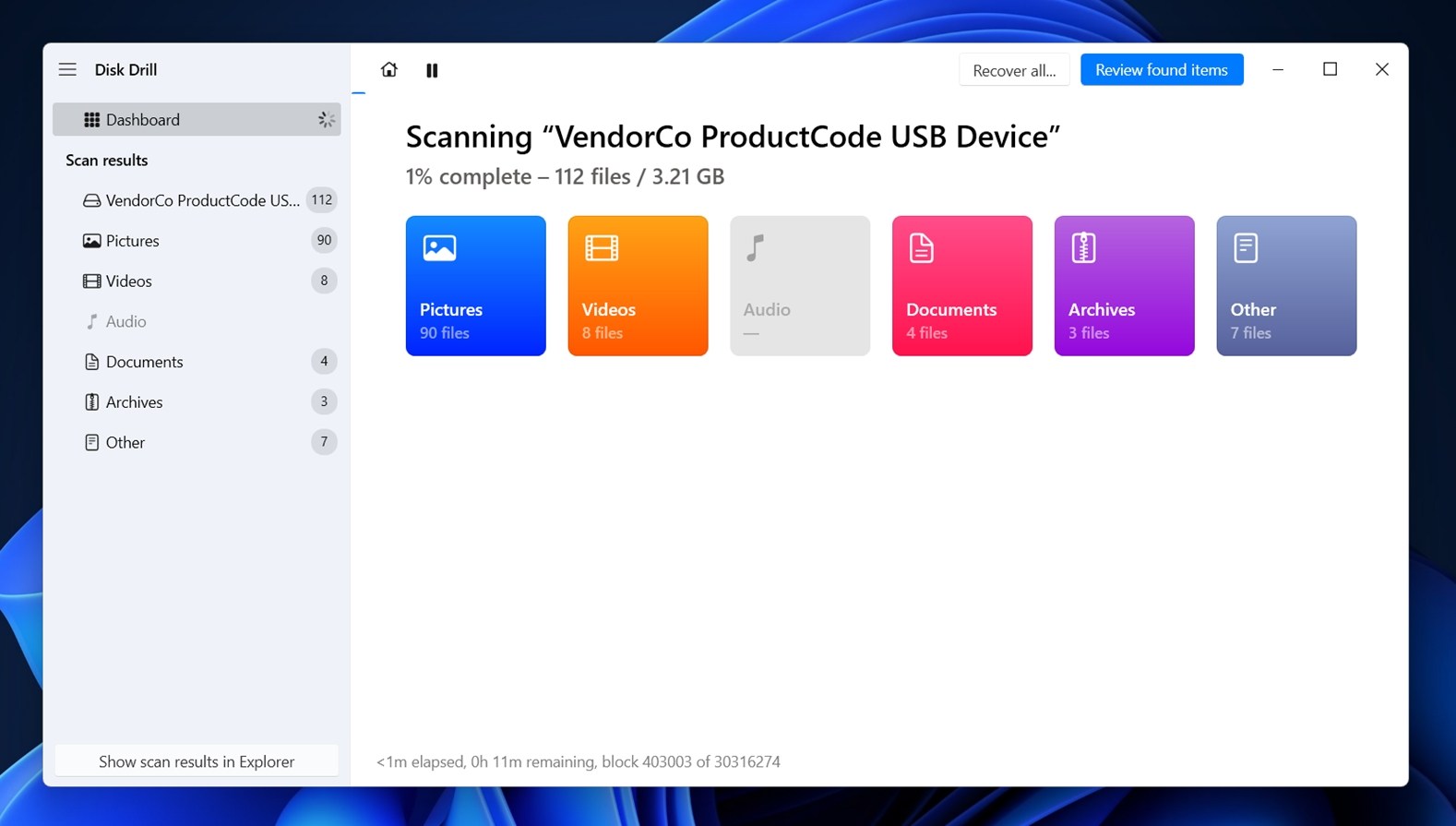 Since we’re talking about Nikon photo recovery, Pictures is where you want. That’s where you’ll find your images.✅
You can pause, save or resume the scan whenever you want. Disk Drill even allows users to save search results for later.
- Preview the files you want to recover, just click on one, and you’ll see a full preview on the right side of the screen. Disk Drill supports nearly every common image format (as long as your system can open the file natively or you have a viewer installed).
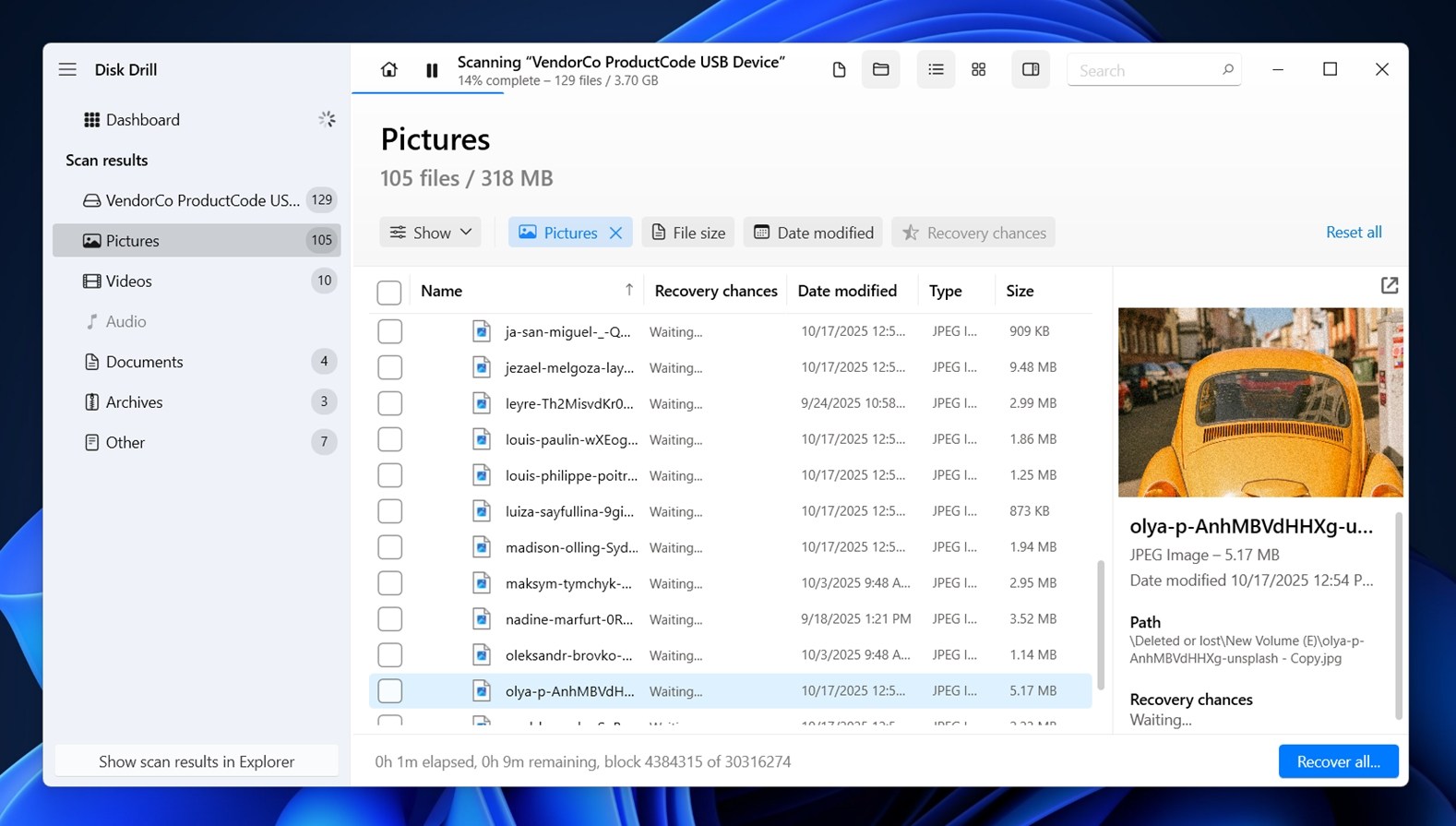 There’s also a Recovery Chance next to each file, like High, Average, or Low. But in our experience, the preview is a much better indicator. If the image loads cleanly, that’s pretty much a guarantee the file will recover without issues. What you see there is what you’ll get.🗨️
Pro Tip: Disk Drill also allows you to filter search results by file type. You can sort results by typing .nef or .nrw into the search bar.
- Select the files you wish to recover from the SD card and select the Recover button.
- Here, choose a destination – never recover back to the same card.
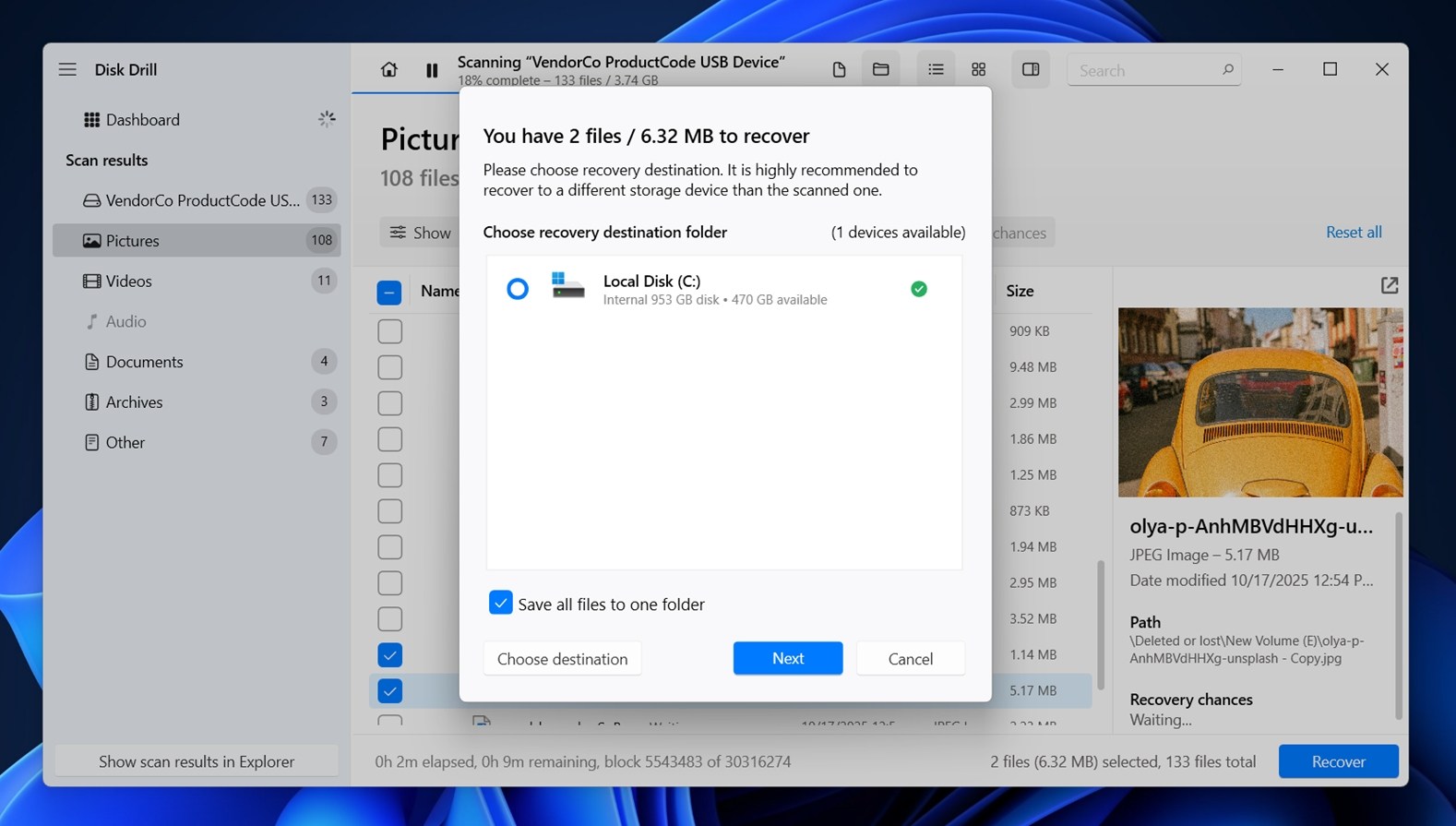
- Once it’s done, Disk Drill opens the destination folder so you can verify everything. If the previews looked good, chances are your photos are back and viewable right away.
Disk Drill comes packed with extra features – things like byte-to-byte backups, recovery vault protection, and session saves if you’re working with a large card. If you want a full breakdown, we’ve got a detailed review you can check out.
That said, for most Nikon photo recovery cases, you don’t need to dig into all that. The standard recovery process is simple and gets the job done in just a couple of clicks. No need to overcomplicate it.
Option B: Recuva
Now let’s talk about Recuva. Compared to Disk Drill, Recuva offers a much more modest experience – both in how it looks and in what it can pull off. But to be fair, it’s free, dead simple to use, and for basic cases, it still might get the job done.
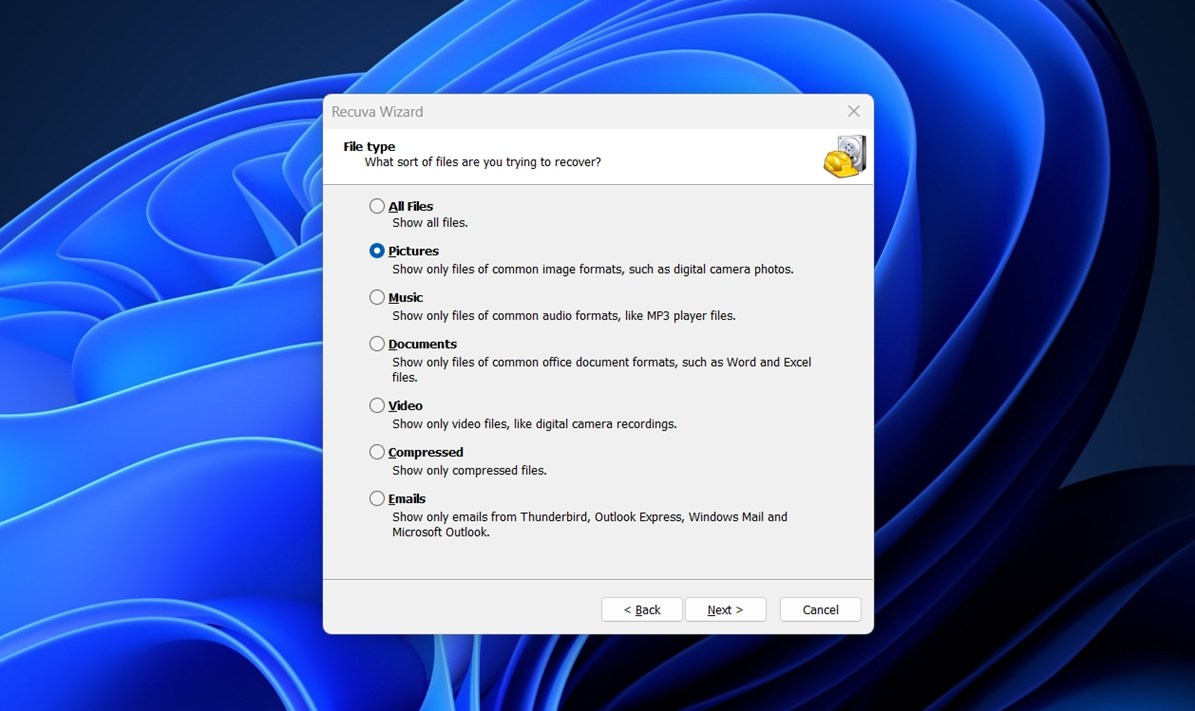
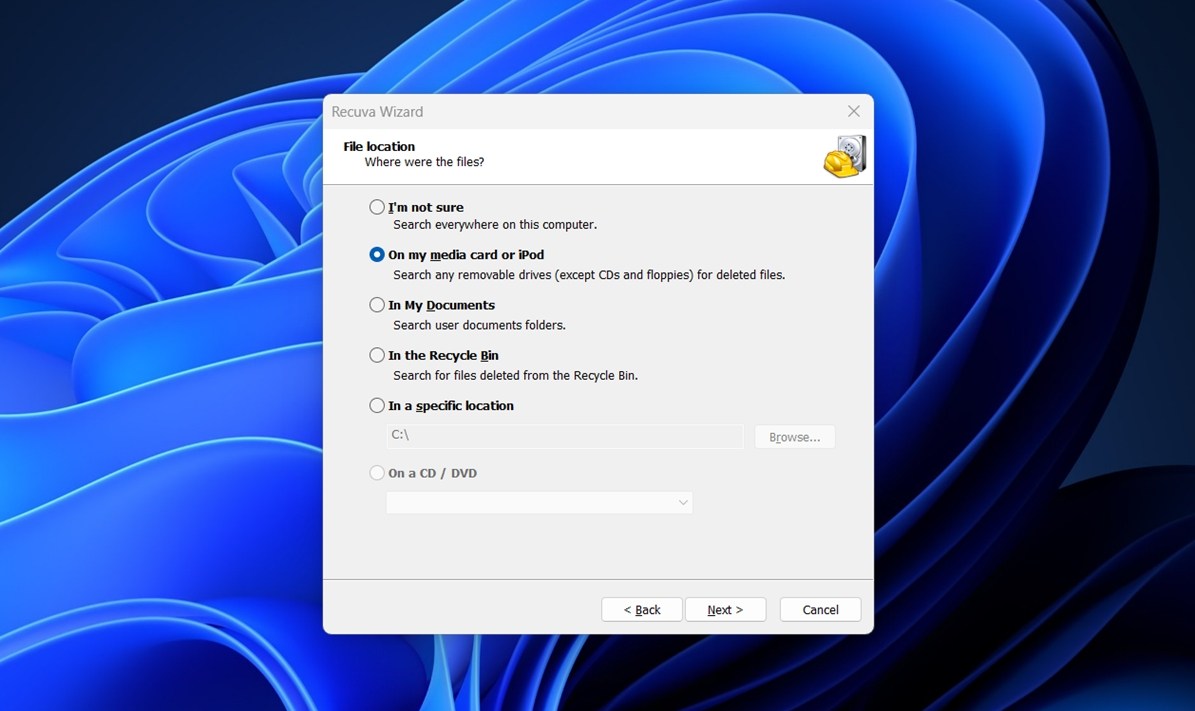
Recuva walks you through recovery with a step-by-step wizard. You pick the file type (Photos), choose the location (your Nikon SD card), and let it scan. For lost JPEGs or recently deleted shots, it can sometimes bring back exactly what you need without much effort.
That said, in our tests, its performance with RAW files like .NEF or .NRW was far from ideal. It often missed files entirely or recovered them in broken fragments. So if you’re working with Nikon RAW images or recovering from a card that’s been formatted or corrupted, you’ll probably want to skip this one and go with a more capable tool like Disk Drill.
You can follow these steps to perform Nikon deleted photo recovery from your SD card using Recuva:
- Download and Install Recuva, then launch it on your computer.

- Now, click Next from the initial window that’ll open. Here, you can select the specific type that you wish to recover. For example, if you choose pictures, Recuva will search for deleted photos on your memory card. You can also select All Files for a more exhaustive search.
- In the next window, select the location from which you wish to discover. Then click Next again.
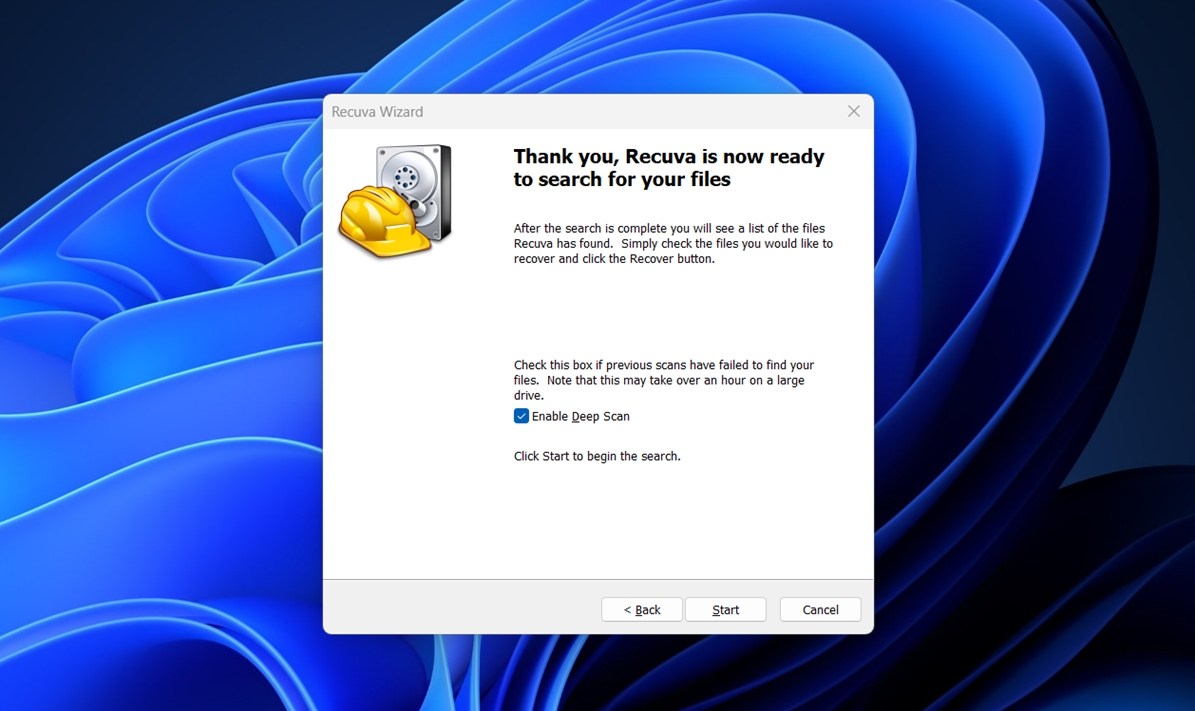
- Tick the box beside Enable Deep Scan and hit Start.
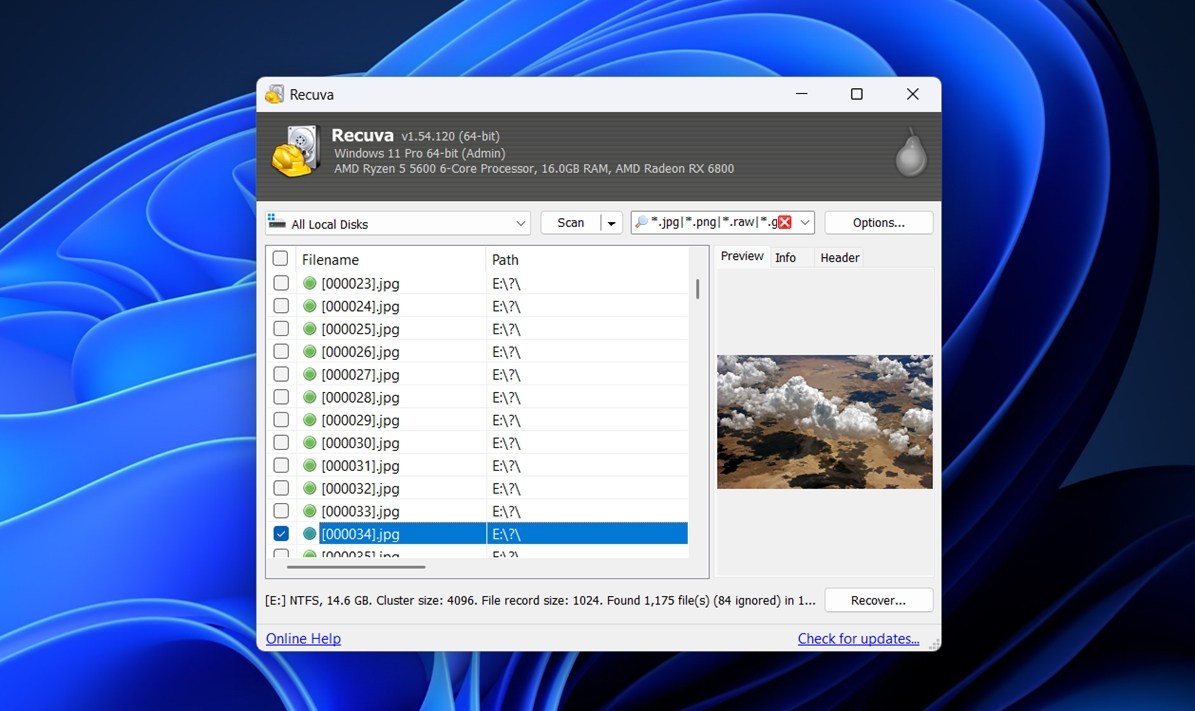
- You can preview the files you wish to recover by clicking on them in the left window. Tick the checkboxes to select these files, then click Recover. Now, select a location where you wish to save the recovered files. Then, click OK.
You might’ve come across something called Recuva Pro while downloading the free version. Here’s the thing: we’ve tested Recuva thoroughly, and we can say this clearly: Recuva Pro doesn’t improve the recovery engine in any way.
In other words, if the free version couldn’t find your deleted Nikon photos, the Pro version won’t either. All it adds is support for virtual hard drives and automatic updates. So don’t assume upgrading will unlock some deeper scan or better recovery, it won’t. If Recuva didn’t detect your .NEF or .JPG files the first time, your best bet is to switch tools, not versions.
Does Nikon Have Built-In Photo Recovery or Cloud Backup?
Nikon doesn’t offer any “undelete” feature on any of its cameras, and there’s no built-in photo recovery system that can bring back deleted files directly from the device. So if you were hoping for an undo button after a format or accidental deletion, unfortunately, that’s not something digital cameras include.
However, there are a few tools and services from Nikon that can help (but only under specific conditions).
Nikon Software (ViewNX‑i and NX Studio)
Nikon used to bundle a program called ViewNX‑i, which includes a “Backup & Restore” feature. On Nikon’s official page, it’s now marked as “This product has been archived.”
If you had previously used it to copy and back up your photos manually, you can restore from that archive. But it’s important to mention that this isn’t automatic. It only helps if you set it up beforehand and intentionally backed up your files.
Nikon’s newer NX Studio software doesn’t have recovery capabilities. It’s built mainly for editing, viewing, and organizing your images. So if you’ve already lost data, NX Studio won’t be much help.
Nikon Cloud Storage (SnapBridge and Image Space)
Now, this is where things might work in your favor.
If you use SnapBridge (Nikon’s mobile app), you may have enabled automatic uploads of your photos to Nikon Image Space. This is Nikon’s cloud platform, and it gives you 2 GB of storage with a free Nikon ID, or 20 GB if you’ve registered a Nikon product. Some SnapBridge-enabled cameras even get unlimited cloud storage for 2MP “web-size” photos. That’s low resolution, but still better than losing everything.
Newer models, like the Z6 III, go a step further. They support Nikon’s Imaging Cloud, which can automatically upload your photos to external cloud services like Dropbox or Google Photos (again, only if this feature was set up beforehand will it be useful in your case).
Can I Restore Data from a Nikon Camera Directly?
No, you cannot restore data from a Nikon camera directly.
Earlier, the USB mass storage system presented a camera’s storage to the computer as a removable drive. This meant that users had free access to the file system and could inadvertently re-format the filesystem while copying and transferring data. Such unrestricted access could have unpredictable consequences.
Media Transfer Protocol (MTP) is a new transfer protocol developed by Microsoft to connect portable devices. Most new cameras are only compatible with the MTP mode, so third-party data recovery software won’t be able to access the data in the camera’s file system.
Thus, we recommend that you use a memory card to restore data. Since they are flash storage devices, you can use an SD card to recover lost or deleted photos from your Nikon camera without any hassles.
Quick Word on Recovery Chances
To wrap this up, we want to answer something a reader asked us recently: “Does the specific Nikon model I use affect my chances of recovering deleted photos?”
Short answer: yes, but not for the reasons you might think (it’s all about the type of memory card it uses and how the camera formats it).
- Most Nikon DSLRs in the entry and mid-range category (think D3000–D780 series) use SD cards, usually formatted in FAT32 or exFAT. These formats are well-supported by basically all photo recovery software. So if you’re using something like a D5600 or D7500, recovery tools like Disk Drill will have no trouble scanning those cards.
- Higher-end Nikon cameras, like the D850, Z6, Z7, Z8, and Z9, use XQD or CFexpress cards. These are always formatted in exFAT, which is also widely supported. The catch? Some models allow a “Full Format” option that wipes cards more thoroughly.If you used Quick Format, though, there’s still a good chance of getting your data back.🔗
If you want to know why a full format is a dead end when it comes to photo recovery, we’ve explained that in detail in our article on the Difference Between Full and Quick Format.
- As for older DSLRs, some used CompactFlash (CF) cards. These are formatted in FAT32 and still compatible with most recovery tools, but finding a modern card reader for CF cards can be a hassle.
- Coolpix point-and-shoot cameras mostly use SD or microSD cards. Same recovery rules apply – just make sure you’re scanning the full card, not a partition.
- And finally, internal memory. Most Nikon cameras don’t store images there, and even if they do, it’s limited and inaccessible for recovery. For example, the Nikon D3100 had a built-in buffer that held demo images (but those disappear the moment you insert a memory card).
Bottom line here is that it’s mostly about your actions, not the specific Nikon model.
FAQ
How to recover deleted photos from a Nikon camera SD card?
You can effortlessly recover deleted photos from a Nikon camera SD card using data recovery software. Just follow these steps:
- Take out the memory card from your Nikon camera.
- Insert the card into your computer using a card reader.
- Install photo recovery software (any trusted tool that supports SD cards and .NEF, .NRW, .JPG files).
- Open the software and select your card from the list of drives.
- Run a scan to search for deleted files.
- Preview (if possible) and select the photos you want to recover.
- Recover to a different folder on your computer.
Is it possible to recover deleted photos from the Nikon camera's internal memory?
In most cases, no, you can’t recover deleted photos from a Nikon camera’s internal memory.
That’s because nearly all modern Nikon cameras (DSLR, mirrorless, and point-and-shoot) don’t actually store images in internal memory. They rely entirely on removable media like SD, XQD, or CFexpress cards. Even when internal memory exists, it’s typically limited to a buffer for demo or preview purposes, and it gets wiped as soon as you insert a memory card.
Unless you’re using a very old or obscure Nikon model that happened to save photos internally (and even then, access to that storage is usually locked down), recovery isn’t an option.
So if you’ve lost images, your best bet is always to focus on the memory card.
What is the best Nikon photo recovery software?
To recover photos and videos efficiently from your Nikon camera or SD cards, you can use one of the following data recovery software:
- Disk Drill
- Recuva
- Stellar Data Recovery
- TestDisk (PhotoRec)
- EaseUS
Do Nikon cameras have a recycle bin?
While Nikon cameras do have a ‘Trash’ option, it doesn’t work like the computer’s Recycle Bin, from which you can restore deleted photos or videos. If you wish to recover these files, you can use data recovery software to retrieve deleted photos from the camera’s SD card.
Can I retrieve deleted photos from Nikon Coolpix?
Yes, you can retrieve deleted photos from Nikon Coolpix cameras. Just detach your memory card from the camera, connect it to your computer and recover the photos with reliable data recovery software like Disk Drill.
How to recover deleted videos from a Nikon camera?
It is basically the same as recovering photos. You’ll use the same recovery tools, follow the same steps, and scan the same memory card. Video files like .MOV and .MP4 (common on Nikon cameras) are fully supported by most recovery apps.
If you’re using Disk Drill, pay special attention to the Advanced Camera Recovery mode. It’s built specifically for complex cases, like large video files that may have been fragmented. This mode can reconstruct video footage that the standard scan might miss.
This article was written by Joshua Solomon, a Contributing Writer at Handy Recovery Advisor. It was recently updated by Roman Demian. It was also verified for technical accuracy by Andrey Vasilyev, our editorial advisor.
Curious about our content creation process? Take a look at our Editor Guidelines.